Wednesday, January 11, 2012
Romney extends lead with New Hampshire victory

From The Hindu
Labels: Democrats, Mitt Romney, New Hampshire primary, President Barack Obama, Republicans, U.S. Presidential elections

Tuesday, January 11, 2011
Between a rock and a hard place

From The Hindu
With the 112th Congress of the United States beginning its work this week, President Barack Obama can expect that many, if not most, of his policy initiatives for 2011 will literally be “up-Hill” struggles, beleaguered by attacks and blockades from a fresh crop of conservatives in the House of Representatives.
Since the November Congressional election handed Democrats a stinging defeat in many States, reversing their control of the House entirely and thinning out their majority in the Senate, the President was quick to strike an inclusive note in its aftermath, in which he emphasised that Republicans shared the responsibility for governing a nation reeling under the effects of the global economic downturn.
Yet the notion of a post-November shift in power balance may be somewhat exaggerated, for it could be argued that it is the Republicans who are between a rock — the Democratic policy juggernaut that is the Obama White House — and a hard place.
Indulge in a thought experiment for a moment. The year is 2011 and the month is, let us say, April. The U.S. unemployment rate is still hovering at above nine per cent, as it has been for most of the previous year.
President Obama, sensing that a funding boost for unemployment support programmes is necessary to reduce the numbers of desperate, near-bankrupt ordinary Americans, proposes a bill to that effect. The Senate passes it narrowly, and it goes to the House.
If the new Speaker of the House, John Boehner, takes a view that supporting such a bill would be true to the mandate that he has been handed by voters — to get the U.S. economy back on track following its dramatic collapse under a Republican administration — he and his colleagues would support it and it would pass.
In that scenario his party would still be able to project an image of capable governance and effective bipartisan deal-making, an asset that might prove to be vital during the 2012 presidential elections. Given that the Democratic campaign is certain to blame the Republicans for engendering the crisis this image might well be the deciding factor.
If Mr. Boehner however bends to the will of newbie Congressmen with Tea-Party roots, who will invariably be baying for deficit reduction measures, even during the worst recession in 80 years, he would endanger the prospects of his party in 2012, and with it his own political future.
The reason for this is that besides the risk that Congressional obstructionism through filibuster could deprive the Republicans of any claim to responsible governance, the Republican Party is still struggling to come up with a suitable candidate to run against President Obama in 2012.
Hence the Republicans need every bit of political ammunition they can find if they are to have any hope at all of recapturing the White House; and in that context, to appear callous to the needs of those who have suffered the most during the recession, or to those who have benefitted from last year's game-changing healthcare reform, could be tantamount to political suicide.
Also, as economists such as Paul Krugman and Christina Romer have pointed out, there is a genuine concern that early rollbacks of stimulus policies, in fear of deficit expansion, could resurrect the nightmarish prospect of a long-festering recession, similar to what actually happened in the 1930s.
Similarly Health and Human Services Secretary Kathleen Sebelius warned in an op-ed this week that if deficit hawks attempted to get the healthcare reform laws repealed, that would ironically add close to a trillion dollars to the deficit.
The flipside of that coin, that the U.S.' gargantuan deficit could cripple its economy through a multitude of macroeconomic effects, is certainly a real danger too but one that might be relatively less immediate in terms of its consequences for middle-class Americans.
It is not as though Republicans are unmindful of these ground realities. The problem is that they are equally aware that their control over the House gives them leverage to bargain with the Democrats and the White House — which taken to an extreme could imply a full-scale government shutdown as demonstrated by former House Speaker and Republican Newt Gingrich.
Yet if Mr. Boehner takes Republicans down the path that his predecessor did, history suggests that it is the House majority party, and perhaps millions of furloughed public sector workers, who would feel the pain of government departments suddenly coming to a grinding halt and the flow of pay cheques drying up.
When Mr. Gingrich brought that fate upon the U.S. in 1995, in the heat of a mounting personal rivalry with erstwhile President Bill Clinton, the fallout was that his poll ratings dropped dramatically while Mr. Clinton's public approval soared and brought him a step closer to getting re-elected to a second term.
If all this appears obvious then for what murkier reasons might Mr. Boehner choose to impose a stranglehold on Congress?
The answer comes back again and again to the Tea Party. With even President Obama admitting that Democrats got a “shellacking” in November, the unmistakable wave of discontented voters picking red over blue was interpreted in some quarters as a victory for the Tea Party, which had finally “arrived” in the mainstream.
Yet as the case of Christine O'Donnell demonstrated, the average American voter often shies away from the Tea Party's relatively extreme views on certain subjects — including race relations and the role of religion in politics.
In the primaries Ms O'Donnell, a self-confessed former practitioner of witchcraft, knocked out incumbent Congressman Michael Castle from the race but then ended up losing the House seat to Democrat Chris Coons in November. Speaking after his victory Mr. Coons said to voters, “You sent a message that the politics of no, the politics of division, the politics of negativity have no place in this great state.”
Doubtless senior Republican strategists somewhere were gnashing their teeth in frustration as Ms O'Donnell's foray sabotaged, even if unwittingly, the prospects of a mainstream Republican candidate.
Nevertheless, given their considerable presence in the 2011 Congress — they hold 40 seats in the House, out of a total of 435 seats — the Tea Party Congressmen's strident messages on everything from social conservatism to cutting government welfare spending may have already weighed on Mr. Boehner's calculations.
However if his insecurities about the Tea Party causing cracks in the Republican machine prompt Mr. Boehner to stall the very functioning of Congress, then that might be a sign that the Grand Old Party is more internally fragile than even Mr. Obama and his Democratic colleagues could imagine in their wildest dreams.
Labels: Democrats, Republicans, U.S. Congressional elections, White House
Thursday, May 20, 2010
Wall Street reform bill fails, Democrats let down by their own
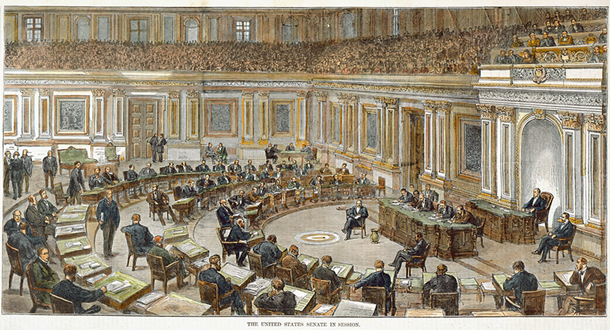
One of the most far-reaching reform packages targeting the basic landscape of Wall Street regulation failed to clear the Senate on Wednesday — and in its wake revealed fault lines within the Democratic caucus of the Upper House of the United States Congress.
The reform proposal, which Senator Chris Dodd of the Banking Committee cobbled together and pushed through to the floor of the Senate for debate, fell flat after a motion to conclude the debate saw 42 Senators voting “no”.
The naysayers included Democratic Senators Maria Cantwell and Russ Feingold, both of whom joined with the 39-strong Republican opposition on the grounds that the reforms did not go far enough to improve the transparency of derivatives trading.
In a press release Senator Cantwell said, “Even something like the Hoover Dam, with all the great concrete and all the great engineering … still has a problem if somebody drills a hole in the bottom of it.”
Her principal objection was that the reforms did not require traded derivatives to be first cleared at an exchange. She said, “If we don’t bring derivatives onto the same kind of mechanisms we have for other products in the financial markets… then I don’t know what we’re doing out here in the context of what brought us into this crisis.”
According to reports both Senators Cantwell and Feingold joined with Republican Senator John McCain to press for the restoration of the Glass-Steagall Act, which would create a firewall between commercial and investment banking arms of financial institutions.
While the supporters of the bill were joined by two Republican Senators voting “aye”, they also lost one crucial vote from Senator Arlen Specter, who was absent after his defeat in the Pennsylvania primary on Tuesday evening.
In a procedural manoeuvre that would keep open a window to call for another vote in the future Senate majority leader Harry Reid also voted “no”, bringing the “ayes” to 57.
The vote was followed by bitter partisan accusations of the tenor witnessed during the healthcare debate, with both parties accusing the other of deliberate manipulations or obstructionism.
Labels: Democrats, regulation reform bill, Wall Street
Powerful anti-Washington mood stalks primaries

From The Hindu
It has happened. The American election juggernaut has begun to creak into action six months ahead of its slated, official start.
On Tuesday and Wednesday, three states — Kentucky, Pennsylvania and Arkansas — faced primaries: intra-party elections in which candidates for the United States Congress from each party get nominated.
As one would expected in this feisty democracy — which could even compete with India in its degree of rambunctiousness — political pundits shifted into top gear as the results began to trickle in. Since then predictions have been flying fast and furious with all eyes on one variable — what does this mean for November?
While the answer is far from clear, one strong trend has become immediately evident: a powerful anti-Washington mood has gripped voters across the country.
In Kentucky, the fiscally conservative Tea Party movement scored a major victory — arguably its first in mainstream politics — when its candidate Rand Paul defeated Republican stalwart Trey Grayson, garnering close to 59 per cent of the vote.
Mr. Paul, the son of the former Congressman and Republican presidential candidate, Ron Paul, was swept to the forefront after months of wooing the conservative Republicans with a promise to attack the soaring budget deficit, eliminate congressional earmarks and institute term limits.
Tea Party gains
His success marks a key inflection point for the Tea Party movement, and will likely galvanise their grassroots efforts in primaries in other states. Or so some pundits argued.
Others, including Democratic National Committee chairman Tim Kaine, described Mr. Paul as an “extreme candidate” who “used a small part of the electorate to win over Grayson”.
For many Democrats then, Mr. Paul's victory would appear to improve their prospects in Kentucky.
In Pennsylvania, the sub-plot to the primary reflected the strong anti-incumbency mood more than anywhere else; heightening the risk that the November Congressional elections may be swept out of the hands of the Democrats.
In this state, it was a long-time Washington insider who lost his job. Senator Arlen Specter who, in a controversial volte face shifted allegiance from the Republican to the Democratic Party in 2009, was trounced by Representative Joe Sestak despite endorsements from the White House and leading Democrats.
Mr. Sestak, who took out TV advertisements criticising Mr. Specter's changing party allegiances, was quoted as saying: “This is what democracy looks like… A win for the people, over the establishment, over the status quo, even over Washington, DC.”
Arkansas also saw support for a Washington insider, Democratic Senator Blanche Lincoln, wobble dangerously. She came away with a sliver of a lead over state Lieutenant-Governor Bill Halter. Too narrow a margin for her to avoid a run-off decider vote next month.
Observers cited a range of reasons why Mr. Halter did better than expected. While he had a reasonably solid support base — including labour unions, liberal groups and conservative voters in rural counties — it was too variegated to warrant any sweeping conclusions about his state-wide popularity. That conclusion, in turn, lends credence to the theory that the Arkansas result was principally shaped by a general air of mistrust surrounding Washington politics.
While Washington Democrats have held sway over Congress since 2008, they are in serious danger of losing at least a part of their control in November if this week's primaries are anything to go by. If it is not the far-right Tea Party, it may well be anti-establishment, local champions who oust them.
This would mean President Barack Obama would have a much harder time getting legislation passed.
Yet it is not all doom and gloom — Democrats and the White House have several powerful trends that may counteract the anti-incumbency mood, including improving jobs figures month-on-month, and possibly better healthcare outcomes in the aftermath of the hard-fought battle against insurance companies.
But these are hardly forces that Mr. Obama can rely on for success in November. If he wishes to save his Democratic colleagues from looming electoral defeat, he will need to continue reaching out to the American people to explain why their country is not as badly off as they think it is — and what he and Congress have done to help.
Labels: Democrats, elections, Republicans, Tea Party Movement, U.S. primaries, United States Congress
Monday, March 22, 2010
U.S. Congress approves historic healthcare Bill

From The Hindu
The United States House of Representatives made history late Sunday night by passing the Senate version of the healthcare reform bill by a narrow but firm margin of 219-212. Further the House also passed the “fix it” bill of House amendments to the Senate bill, by a margin of 217-205. Every House Republican voted against the bill.
Speaking after the vote, Mr. Obama said, “This is what change looks like,” adding however that this was a victory for commonsense rather than for any political party. He conceded that it was not an easy vote for a lot of people, “But it was the right vote,” he said.
Mr. Obama reminded the caucus that the vote was for the common man: “To every unsung American, who took the time to sit down and write a letter… hoping your voice would be heard, it has been heard tonight.”
In due course it is expected that the bill passed on Sunday would lead to additional insurance coverage for almost 32 million more Americans, bringing the healthcare system closer than ever to the goal of universal coverage. It will also weaken the grip of health insurance companies over the market by preventing them from denying coverage based on pre-existing conditions and restrict their ability to raise premiums or drop coverage.
Further, children may remain on their parents' insurance policies until the age of 26 and insurance companies would no longer be able to impose lifetime limits on policies. The costs of obtaining insurance cover would also fall for older people and those with pre-existing conditions through their participation in “high-risk pools.” Small business would also derive such benefits by participating in state-level exchanges and some businesses would face penalties for not providing their employees with insurance.
The bill, which will soon be signed into law by President Obama as the Patient Protection and Affordable Care Act, will also bring down the deficit of the country by $143 billion over 10 years and by over a trillion dollars within the following 10 years, according to the Congressional Budget Office (CBO), the non-partisan scorekeeper on such debates. It will cost the American taxpayer $940 billion, according to the CBO.
High drama on the abortion issue accompanied the passage of the bill. Pro-life Democratic Congressman Bart Stupak – who dropped his opposition to the bill based on the promise of a Presidential Executive Order banning the use of federal funds for abortions – was called “baby-killer” by an unknown member of Congress from the Republican side. Mr. Stupak has been one of the most staunch pro-lifers in the House in years.
Labels: Democrats, healthcare Bill, President Barack Obama, Republicans, U.S. Congress
Sunday, March 21, 2010
Democrats claim to have 216 votes

From The Hindu
With less than three hours to go before a historic vote on healthcare reform, scheduled for Sunday afternoon in the House of Representatives, House Democrat John Larson of Connecticut said on CNN’s State of the Union telecast that his party had garnered the votes necessary to get the bill passed.
Speaking on a panel alongside House Republican Mike Spence, Mr. Larson said that House Democrats had reached the crucial 216-vote mark to see the bill through. However Mr. Spence said that House Republicans would do everything in their power to stop the bill from passing; yet he refused to reveal any details about specific plans.
With 178 Republicans set to vote lock-step against the bill on the floor of the House, they would require at least 38 Democrats to join them in order to kill the bill off. According to reports, 33 Democrats had confirmed they would vote against the bill.
However the Democratic case was bolstered at several points during the course of the week. First, the Congressional Budget Office (CBO) ruled on Thursday that the bill would cost $940 billion over ten years and would lead to a deficit reduction of $138 billion during the same period. The deficit reducing impact was further revised upwards to $143 billion based on new filings over the weekend.
Second, House Speaker Nancy Pelosi reversed an earlier decision to use a “deem and pass” procedure which would bypass the need for a direct up-or-down vote on the Senate version of the bill — a procedure which the Republicans seized upon as an indication of Democratic manipulation of due process. The decision to instead use a direct vote may have further influenced some House Democrats to support the bill on Sunday.
In terms of the procedure to be followed, the overall vote will comprise three sub-votes: first, the House will vote on the rules of the vote itself, second, it will vote on the Senate version of the bill, and third, it will vote on changes to the Senate bill.
If the bill is passed, it will bring to a climactic close the year-long debate on healthcare reform. The passage of the bill would represent a powerful victory for Democrats and a success for President Obama that eluded at least two of his predecessors. It would also imply additional insurance coverage for almost 32 million more Americans, bringing the healthcare system closer than ever to the goal of universal coverage.
Labels: Barack Obama, Democrats, health bill, House Democrat, House Republicans
Tea Party protest turns hostile

From The Hindu
During a protest over the weekend, organised by the conservative Tea Party movement, crowds attacked Democratic members of Congress present on the scene with racist slurs and abuses over sexual orientation, revealing an ugly side of political polarisation the United States.
The protests — centred around the healthcare reform bill that Congress was scheduled to vote on — turned hostile as members of the Congressional Black Caucus were leaving the Longworth House office building from across the Capitol.
According to a member of staff for Representative James Clyburn of South Carolina, Representative John Lewis of Georgia was subjected to racist slurs and a derogatory term relating to sexual orientation was hurled at Representative Barney Frank of Massachusetts, an openly gay Congressman. Rep. Emanuel Cleaver of Missouri was spat on by a protestor.
In a statement to the Huffington Post Mr. Clyburn said, “It was absolutely shocking to me… Fifty years ago as of last Monday... I led the first demonstrations in South Carolina... And quite frankly I heard some things today I have not heard since… March 15, 1960 when I was marching to try and get off the back of the bus.” Mr. Clyburn said he had told one heckler that he was “the hardest person in the world to intimidate, so they better go somewhere else.”
He went on to add, “A lot of us have been saying for a long time that much of this… is not about health care at all. A lot of those people today demonstrated that this… is about trying to extend a basic fundamental right to people who are less powerful.”
In a similar vein Mr. Frank was reported to have said, “I'm disappointed with the unwillingness to be civil… I was… surprised by the rancour. What it means is obviously the health care bill is proxy for a lot of other sentiments, some of which are perfectly reasonable, but some of which are not.”
According to reports, Capitol police escorted the members of Congress into the Capitol after the confrontation. At least one demonstrator was reported arrested in connection with the spitting incident although a spokesman for Mr. Cleaver was reported as saying that he would not be pressing charges.
Speaking on CNN’s State of the Union programme on Sunday, Democrat John Larson and Republican Mike Spence, both from the House of Representatives, condemned the incident.
The Tea Party movement, which rose into prominence last year, is a fiscally conservative political group whose primary appeal was based on its opposition to the stimulus package of 2009 and expansionary social welfare policies such as healthcare reform.
Labels: Barack Obama, Congress, Democrats, Tea Party Movement
Friday, March 19, 2010
Democrats feel healthcare heat
With the 72-hour deadline for passing the contentious healthcare reform bill approaching rapidly Democrats, under steady fire from across the aisle, are scrambling to get to the “magic number” of 216 votes required for its passage in the House of Representatives on Sunday.
This week a barrage of criticism was levelled at House Speaker Nancy Pelosi for attempting to get the bill through the House using the “deemed passed” rule. By this procedure, House members would simply vote on additional changes to the Senate version of the bill rather than the Senate bill itself. However, after this vote the Senate bill, along with the changes, would be “deemed passed.”
The idea behind this would be to give fence-sitters in the House the option of not having to affix their signature to a Senate bill that they have fundamental doubts about. One major difference between the two versions of the bill is the Senate version's language on funding for health insurance policies that include abortion is weaker than the House's so-called “Stupak amendment.”
Republicans, already mounting stronger attacks against what they have called a “government takeover of healthcare” came out strongly against the proposed House procedure. John Boehner, House Minority Leader described it as a “slaughter solution,” saying it was nothing more than an incumbent protection programme for “Democrats afraid to stick their necks out because they know how much the American people oppose this bill.”
Yet a key development in favour of the Democrats' ambition to win over some 36-odd wavering members of their party was the updated cost-benefit “scoring” provided by the non-partisan Congressional Budget Office this week. The CBO ruled that the proposed reform programme would cost $940 billion and lead to a reduction in the deficit by close to $138 billion over the next 10 years — an estimate that cheered Democrats for showing a lower cost level than what was assumed earlier.
However, the Republicans countered this strongly too: Senator John Cornyn, a member of the Senate Finance Committee, said, “My Democratic colleagues never let the facts get in the way of a good story. Despite claims to the contrary, there is no CBO score… and what it reveals is nothing more than a guess.”
Meanwhile President Obama has busied himself delivering a slew of fiery speeches in Washington and elsewhere, seeking to win support for a bill whose passage would help him end the U.S.'s painful struggle with healthcare reform.
Labels: Barack Obama, Democrats, healthcare, Stupak amendment, U.S. President
Friday, February 26, 2010
Bipartisan nod eludes Obama
Washington: U.S. President Barack Obama hosted a rare televised bipartisan meeting at the Blair House in Washington DC on Thursday in a last-ditch attempt to bring Republicans on board in the deadlocked healthcare debate.
Opening the summit with an exhortation to stay focused on areas of agreement, Mr. Obama said: “I was very pleased to see a glimpse of bipartisanship in the Senate recently in passing a jobs bill, and I hope that continues.”
Yet the debate that ensued was far from smooth sailing for the President and attending Democrats. Republican Senators and Congressmen vigorously challenged the latest reform proposal Mr. Obama unveiled earlier in the week, including cost control, insurance reform, deficit control and expanding coverage.
If Mr. Obama had any hopes that a genuine bipartisan agreement could be hammered out during the seven-hour session, it must have evaporated within the first hour.
Beginning with Senator Lamar Alexander, who argued that comprehensive bills would not work and that Republicans would not be presenting their own comprehensive bill, the debate returned periodically to points of partisan disagreement.
Republicans took issue with the Democratic plan for instituting insurance exchanges driven by mandates (such as penalties for not buying into a policy). While agreeing that competition and diversity were desirable, Congressman Paul Ryan suggested that federalising the regulation of insurance through mandates would not encourage competition and lower costs but only more decentralisation would.
Mr. Obama, while acknowledging that this was a point of “philosophical” importance, rebutted that mandates were necessary to avoid a situation where pools of older, sicker insurance buyers were slapped with higher premiums while younger, more healthy pools paid significantly less.
Mr. Obama stressed the deficit-neutral nature of the reform — and he was pushed to do so given the suggestions by Mr. Alexander that under the proposed bill premiums would actually rise. Interrupting the Senator in a testy exchange, the President cited the figures of the non-partisan scorekeeper, the Congressional Budget Office. According to the CBO, of those individually insured, 57 per cent will see their premiums go down and 43 per cent will see their premiums go up. Of those insured by companies, all of them would see their premiums either stay the same or reduce.
The Republican insistence on a step-by-step approach and starting from scratch would not work, said Mr. Obama. “Baby steps don't get you to the place where people need you to go. We can't solve the pre-existing condition problem if we don't do something about coverage.”
Giving the Republicans a month or six weeks to find common ground with the Democrats, Mr. Obama implied that reform would have to be enacted and financed with or without Republican support.
The real, if slender, hope for a bipartisan bill rests on the few areas of agreement that were fleshed out during the discussion.
These include the need for regulation of insurance markets, the need for insurance exchanges and inter-state insurance, medical malpractice liability reform and curbing of fraud and wastage within the extant system.
If Republican support is not forthcoming, Democrats would likely use reconciliation, a legislative procedure infrequently invoked but simplifying the passage of bills into law on the basis of a simple majority of 51 votes.
While the move may be unpopular and Republicans would likely seize upon it as the “tyranny of the majority”, it would nevertheless permit the Democrats to claim a victory for their top priority of 2009 and move on to tackling the looming crisis of unemployment.
Labels: Barack Obama, Democrats, health care reforms, Republicans
Friday, February 12, 2010
Return to bipartisanship
From The Hindu
Bipartisanship, abandoned in the United States Congress over the last one year, may soon re-emerge. There have been several signs of a new, less rancorous style of American politics making its appearance this year. Last month saw a president-endorsed proposal come up for a bipartisan Senate commission to tackle the worrisome question of how to reduce the spiralling federal deficit. Though many senior Republicans were on board, the proposal did not survive the Senate vote that could have given it life. However in a rare departure from their usual lockstep voting pattern against contentious Democratic bills, 16 Republicans voted in favour of establishing the commission. Further, President Obama’s recent announcement of a bipartisan caucus on healthcare reform may portend an era of more consensual politics. While the discussants are likely to remain polarised on key dimensions of the legislation, the very act of meeting gives the reform effort a fighting chance through what Mr. Obama plainly described as “give-and-take.”
There are two factors hastening the return of bipartisan discourse in Washington. First, the stunning loss of the Massachusetts seat and the prospect of further Congressional defeats in November this year have compelled Mr. Obama to make serious efforts to bring the Republicans on board. He has good reason to do so — the “blanket hold” that Republican Senator Richard Shelby placed on 70-odd executive appointments (until $40 billion federal earmarks favouring his state were agreed) was a flagrant display of opportunism that may well become more recurrent. The reality is that the Obama administration is negotiating a complex matrix of policy goals — including job creation and economic recovery, deficit management, healthcare reform and several difficult areas of U.S. foreign policy engagement — and he needs a measure of Republican support to achieve this. Secondly, it is hardly surprising that the Republicans, still lacking strong leadership and a workable alternative to the Democratic agenda, are fixating on sound-byte-rich subjects such as healthcare reform and the deficit. Given the frustrations of sitting in opposition during a year when far-reaching policies were enacted, they will have to choose between sharing some of the responsibility of governing through bipartisan engagement and risking the charge of obstructionism via unnecessary filibuster. Under these circumstances, the President would do well to nurture the still-nascent initiative of reaching out across party lines, thus preventing partisan bitterness from bringing the legislative and executive processes to their knees.
Labels: American politics, Democrats, Republicans, Senate vote, United States Congress
Tuesday, November 24, 2009
American healthcare drama
The U.S. healthcare reform drama is moving towards a resolution. The House of Representatives narrowly passed a version of the reform bill that scaled down the public option while retaining some landmark elements of the original Obama reform. Most importantly, the bill extends healthcare cover to 36 million uninsured Americans, bringing 96 per cent of the eligible population under the insurance umbrella. With the Senate voting last week to take up the debate in December, the risk of delaying tactics, especially a filibuster by Senate Republicans, has diminished. Now all that stands between President Barack Obama and unprecedented success in reforming a bloated and fundamentally inequitable healthcare system is a Senate vote on and for the bill and, after that, a final vote on a House-reconciled version of it.
The real threat to the U.S. President’s Senate support comes not from three vacillating Democratic Senators but from a potentially ruinous failure to convince the American public that his reform proposals will create a system that is more equitable in its delivery and deficit-neutral in its cost. The recent fall in Mr. Obama’s approval ratings to below 50 per cent for the first time reflects a failure to come with a bold political initiative to engage with, and enthuse, the American public. To put this in perspective, one needs only to recall how his brilliant campaign for the presidency was powered by broad-based and innovative grassroots appeal — among other things, through the use of the social media, rousing speeches that somehow managed to strike the right social balances, and genuinely democratic internet-based fundraising. Candidate Obama had charisma but, more importantly, demonstrated a gift for inspiring ordinary people with his inclusive promise of leadership. This left the Republican campaign floundering amidst confused and bitter sound bytes. But given the highly polarised nature of American politics and with the White House team performing below par, the Republicans, and especially their right wing, have recovered some ground. Specifically on healthcare reform, until the recent upturn in its fortunes, the administration seemed to be retreating into a cocoon of policy analytics. President Obama may well be banking on regaining his touch, and the political advantage, on the strength of his adroit technical manoeuvres and Congressional victories. Paradoxically, the prospects of his most ambitious reform project hinge on whether he has the capability to persuade millions of ordinary Americans — many of whom suffer from poor healthcare by developed country standards and debilitating unemployment — of its vital necessity.
Labels: approval ratings, Democrats, Healthcare reform, Obama, Republicans

Subscribe to Posts [Atom]


