Tuesday, November 23, 2010
Wall Street firms on FBI scanner
From The Hindu
The Federal Bureau of Investigation is poised to launch an unprecedented barrage of criminal and civil charges relating to insider trading against leading Wall Street organisations including investment bankers, hedge-fund and mutual-fund traders and consultants and analysts.
According to a report by the Wall Street Journal which quoted unnamed federal authorities, the culmination of a three-year investigations by the FBI will “expose a culture of pervasive insider trading in U.S. financial markets, including new ways non-public information is passed to traders through experts tied to specific industries or companies.”
Authorities also added that the impact of their probe on the financial industry would “eclipse” that of any previous such investigation, especially given their focus on multiple insider-trading rings reaping illegal profits to the tune of tens of millions of dollars.
Two firms mentioned by the government sources, Goldman Sachs Group and Primary Global Research, refused to comment when asked about whether they were being investigated. Goldman Sachs is a major Wall Street investment bank and trading company and Primary Global is a California firm that “connects experts with investors seeking information in the technology, health-care and other industries.”
The Wall Street Journal report also quoted an email from John Kinnucan, a principal at Broadband Research, in which he warned 20 hedge fund and mutual fund clients of a visit by the FBI.
“Today two fresh faced eager beavers from the FBI showed up unannounced (obviously) on my doorstep thoroughly convinced that my clients have been trading on copious inside information,” he said, adding, “We obviously beg to differ, so have therefore declined the young gentleman's gracious offer to wear a wire and therefore ensnare you in their devious web.”
The FBI investigation comes even as U.S. Attorney Preet Bharara of Manhattan, New York, kept up the pressure on the insider trading issue. Exactly a year ago Mr. Bharara brought insider trading charges against 14 high-profile Wall Street bankers and consultants including Raj Rajaratnam of Galleon Management, Rajiv Goel of the investment arm of Intel Corporation, Anil Kumar of McKinsey and Company and Robert Moffat of IBM.
All 14 were charged with participating in insider trading schemes that “together netted more than $20 million in illegal profits,” the FBI said, and that case represented the first time that court-authorized wiretaps were used to target significant insider trading on Wall Street.
Earlier this month Mr. Bharara announced that Ali Hariri, a former executive at Atheros Communications, had been sentenced to 18 months in prison for his participation in the “largest hedge fund insider trading case in history.” In that case the court also imposed a two-year term of supervised release and a $50,000 fine.
The Federal Bureau of Investigation is poised to launch an unprecedented barrage of criminal and civil charges relating to insider trading against leading Wall Street organisations including investment bankers, hedge-fund and mutual-fund traders and consultants and analysts.
According to a report by the Wall Street Journal which quoted unnamed federal authorities, the culmination of a three-year investigations by the FBI will “expose a culture of pervasive insider trading in U.S. financial markets, including new ways non-public information is passed to traders through experts tied to specific industries or companies.”
Authorities also added that the impact of their probe on the financial industry would “eclipse” that of any previous such investigation, especially given their focus on multiple insider-trading rings reaping illegal profits to the tune of tens of millions of dollars.
Two firms mentioned by the government sources, Goldman Sachs Group and Primary Global Research, refused to comment when asked about whether they were being investigated. Goldman Sachs is a major Wall Street investment bank and trading company and Primary Global is a California firm that “connects experts with investors seeking information in the technology, health-care and other industries.”
The Wall Street Journal report also quoted an email from John Kinnucan, a principal at Broadband Research, in which he warned 20 hedge fund and mutual fund clients of a visit by the FBI.
“Today two fresh faced eager beavers from the FBI showed up unannounced (obviously) on my doorstep thoroughly convinced that my clients have been trading on copious inside information,” he said, adding, “We obviously beg to differ, so have therefore declined the young gentleman's gracious offer to wear a wire and therefore ensnare you in their devious web.”
The FBI investigation comes even as U.S. Attorney Preet Bharara of Manhattan, New York, kept up the pressure on the insider trading issue. Exactly a year ago Mr. Bharara brought insider trading charges against 14 high-profile Wall Street bankers and consultants including Raj Rajaratnam of Galleon Management, Rajiv Goel of the investment arm of Intel Corporation, Anil Kumar of McKinsey and Company and Robert Moffat of IBM.
All 14 were charged with participating in insider trading schemes that “together netted more than $20 million in illegal profits,” the FBI said, and that case represented the first time that court-authorized wiretaps were used to target significant insider trading on Wall Street.
Earlier this month Mr. Bharara announced that Ali Hariri, a former executive at Atheros Communications, had been sentenced to 18 months in prison for his participation in the “largest hedge fund insider trading case in history.” In that case the court also imposed a two-year term of supervised release and a $50,000 fine.
Labels: FBI, Goldman Sachs, hedge-fund, insider trading, investment bankers, mutual-fund, Primary Global, Wall Street

Thursday, May 20, 2010
Wall Street reform bill fails, Democrats let down by their own
From The Hindu
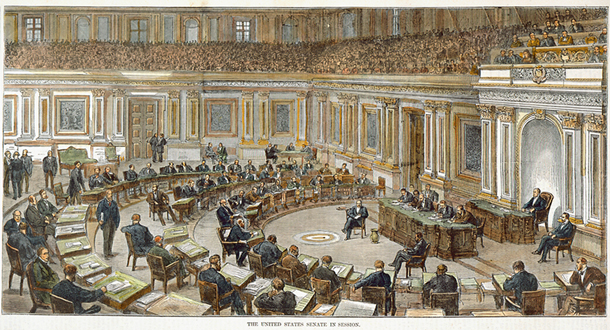
One of the most far-reaching reform packages targeting the basic landscape of Wall Street regulation failed to clear the Senate on Wednesday — and in its wake revealed fault lines within the Democratic caucus of the Upper House of the United States Congress.
The reform proposal, which Senator Chris Dodd of the Banking Committee cobbled together and pushed through to the floor of the Senate for debate, fell flat after a motion to conclude the debate saw 42 Senators voting “no”.
The naysayers included Democratic Senators Maria Cantwell and Russ Feingold, both of whom joined with the 39-strong Republican opposition on the grounds that the reforms did not go far enough to improve the transparency of derivatives trading.
In a press release Senator Cantwell said, “Even something like the Hoover Dam, with all the great concrete and all the great engineering … still has a problem if somebody drills a hole in the bottom of it.”
Her principal objection was that the reforms did not require traded derivatives to be first cleared at an exchange. She said, “If we don’t bring derivatives onto the same kind of mechanisms we have for other products in the financial markets… then I don’t know what we’re doing out here in the context of what brought us into this crisis.”
According to reports both Senators Cantwell and Feingold joined with Republican Senator John McCain to press for the restoration of the Glass-Steagall Act, which would create a firewall between commercial and investment banking arms of financial institutions.
While the supporters of the bill were joined by two Republican Senators voting “aye”, they also lost one crucial vote from Senator Arlen Specter, who was absent after his defeat in the Pennsylvania primary on Tuesday evening.
In a procedural manoeuvre that would keep open a window to call for another vote in the future Senate majority leader Harry Reid also voted “no”, bringing the “ayes” to 57.
The vote was followed by bitter partisan accusations of the tenor witnessed during the healthcare debate, with both parties accusing the other of deliberate manipulations or obstructionism.
Labels: Democrats, regulation reform bill, Wall Street
Tuesday, April 27, 2010
Republicans block financial regulation bill

Senate Republicans on Monday blocked Congress from further considering a major bill that proposed an overhaul of financial regulation in the aftermath of the credit crunch. The move comes even as investment bank Goldman Sachs faced a Congressional hearing on Tuesday that sought to understand the bank’s role in the recent financial crisis.
The regulation reform bill, called the Restoring American Financial Stability Act of 2010 (RAFSA), is the creation of the Senate Banking Committee headed by Democrat Chris Dodd. RAFSA is described by the Committee as “a direct and comprehensive response to the financial crisis that nearly crippled the U.S. economy beginning in 2008”.
Following the move by all 41 Senate Republicans and one Democrat, Ben Nelson, to block the bill from being taken forward to vote in the coming weeks, President Obama said, “I am deeply disappointed that Senate Republicans voted in a block against allowing a public debate on Wall Street reform to begin.” Democrats need 60 votes to push the bill through.
The President charged the bill’s blockers of believing that such obstruction was a good political strategy and seeing this delay as “an opportunity to take this debate behind closed doors, where financial industry lobbyists can water down reform or kill it altogether”.
However, he argued, “The American people can’t afford that. A lack of consumer protections and a lack of accountability on Wall Street nearly brought our economy to its knees, and helped cause the pain that has left millions of Americans without jobs and without homes.” He urged the Senate to get back to work and “put the interests of the country ahead of party”.
Yet Republicans were quick to clarify the grounds on which they objected to the bill, in a bid to pre-empt accusations of obstructionism and siding with Wall Street over Main Street.
Orderly liquidation authority
A key point of opposition from the Republicans was the reform that aimed at ending “too big to fail bailouts” through an orderly liquidation authority which would give the government a “viable alternative to the undesirable choice it faced during the financial crisis between bankruptcy of a large, complex financial company that would disrupt markets and damage the economy, and bailout of such financial company that would expose taxpayers to losses and undermine market discipline”.
The main objection was to the Dodd proposal requiring large financial companies to contribute $50 billion over a period of five to ten years to a fund held at the Treasury, which would only be used by the Federal Deposit Insurance Corporation in the “orderly liquidation of a failing financial company with the approval of the Treasury Secretary”.
Further, Senator Judd Gregg was reported as quoting Federal Reserve staffers who said the proposed controls over derivatives trading would “impair financial stability and strong prudential regulation of derivatives; would have serious consequences for the competitiveness of U.S. financial institutions; and would be highly disruptive and costly, both for banks and their customers”.
Senator Gregg said of the Dodd proposals in this regard: “This is just punitive language put in out of spite because there is a movement in this country and in this Congress, unfortunately, which I call pandering populism, which just simply dislikes anything that has to do with Wall Street.”
Senate majority leader Harry Reid however struck back saying, “Chairman Dodd has worked for months with several Republicans on the Banking Committee and has included many Republican-supported ideas in his proposal.” He added that by blocking Democrats from even opening debate on how to hold Wall Street accountable, Republicans were voting “to protect the big banks and their bonuses and to keep this important debate hidden from public scrutiny”.
Underscoring the Democrats determination to get this bill through Congress Mr. Reid said, “Senate Democrats are committed to holding Wall Street accountable and putting consumers back in control. We remain open to working with our Republican colleagues, but we will not tolerate efforts to slow-walk this process or water down this reform because it is too important to middle-class families… across America.”
Labels: regulation reform bill, Senate Republicans, Senator Judd Gregg, Wall Street
Friday, April 23, 2010
Join us, don't fight us: Obama to Wall Street

From The Hindu
President Barack Obama travelled to New York on Thursday where he reached out to Wall Street to win its cooperation on his major financial regulation overhaul package awaiting a Senate vote.
Speaking at the Cooper Union educational institution in Lower Manhattan he said, ?I am here today because I want to urge you to join us, instead of fighting us in this effort. I am here because I believe that these reforms are, in the end, not only in the best interest of our country, but in the best interest of our financial sector. And I am here to explain what reform will look like, and why it matters.?
The House of Representatives already passed a bill last December with sweeping reforms and now Mr. Obama hopes the Senate will follow suit in four key areas of regulation in the coming weeks after which he could sign the reforms into law.
First, Mr. Obama said, the bill being considered in the Senate would create new protections for the financial system and the broader economy, in particular ensuring that ?taxpayers are never again on the hook because a firm is deemed ?too big to fail.?? Arguing that the recent financial crisis had occurred because there was no process ?designed to contain the failure of a Lehman Brothers,? he said that it was for this reason that ?we need a system to shut these firms down with the least amount of collateral damage to innocent people and businesses. He said that he had insisted that the financial industry ? and not taxpayers ? shoulder the costs in the event that a large financial company should falter, with the goal being to make certain that taxpayers are never again on the hook because a firm is deemed ?too big to fail.?
Second, Mr. Obama argued that regulatory reform ought to bring new transparency to financial markets, for example by preventing firms such as AIG from making ?huge and risky bets using derivatives and other complicated financial instruments in ways that defied accountability, or even common sense.? In this regard he said that there was a legitimate role for these financial instruments in our economy, to allay risk and spur investment.
Third, he explained that his administration would enact the ?strongest consumer financial protections ever,? to protect people taking on mortgages and credit cards and auto loans from being misled by ?bandit? companies and losing their homes and fortunes.
Finally, he said that the Wall Street reforms he was proposing would give shareholders ?new power? in the financial system, including having a say on the salaries and bonuses awarded to top executives and a stronger role in determining who manages the companies in which they?ve placed their savings. ?Americans don?t begrudge anybody for success when that success is earned. But when we read in the past about enormous executive bonuses at firms even as they were relying on assistance from taxpayers, it offended our fundamental values,? Mr. Obama said, adding that this compensation structure had also created perverse incentives to take "reckless risks."
Labels: Barack Obama, House of Representatives, Wall Street
Sunday, April 18, 2010
Obama warns Wall Street

From The Hindu
Setting the stage for a major overhaul of financial regulation in the coming weeks, U.S. President Barack Obama on Saturday said Wall Street banks and other financial institutions had been “reckless” and “irresponsible” and they, along with their “special interest” representatives in Washington, were to blame for the crisis that has “ripped through our economy”. He added that his administration would hold them accountable and protect and empower consumers going forward.
Quoting investment guru Warren Buffet during his weekly address to the nation Mr. Obama put derivatives trading in the regulatory spotlight arguing that “derivatives bought and sold with little oversight [are] financial weapons of mass destruction”. He noted that the crisis was in part caused by firms such as AIG making “huge and risky bets — using things like derivatives — without accountability”.
In the context of the financial regulation legislation awaiting a Senate debate and vote over the coming weeks and months, Mr. Obama also sharply criticised the Republicans for siding with the special interests of Wall Street and waging “a relentless campaign to thwart even basic, common-sense rules — rules to prevent abuse and protect consumers”.
In a direct attack on the Republican leadership including Senate minority leader Mitch McConnell and Republican Senatorial Committee chairman John Cornyn, he said they had recently met two dozen top Wall Street executives to talk about how to block progress on this issue.
“Lo and behold, when he returned to Washington, the Senate Republican leader came out against the common-sense reforms we've proposed. In doing so, he made the cynical and deceptive assertion that reform would somehow enable future bailouts — when he knows that it would do just the opposite,” said Mr. Obama.
In addition to tighter controls over derivatives trading, he outlined a range of key areas of regulatory reform, including consumer financial protections, closing loopholes that allowed executives in institutions that were “too big to fail” to take risks that endangered the entire economy, and giving shareholders “new power” in the financial system, such as a vote on the salaries and bonuses awarded to top executives.
Underscoring his determination to get the legislation passed, Mr. Obama said: “This is certain: one way or another, we will move forward. This issue is too important. The costs of inaction are too great.”
Labels: Barack Obama, financial crisis, U.S. politics, Wall Street

Subscribe to Comments [Atom]


