Thursday, May 20, 2010
Wall Street reform bill fails, Democrats let down by their own
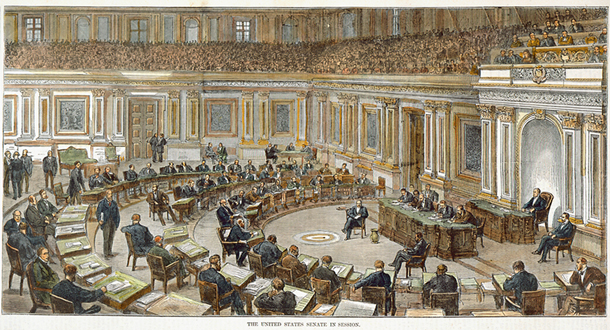
From The Hindu
One of the most far-reaching reform packages targeting the basic landscape of Wall Street regulation failed to clear the Senate on Wednesday — and in its wake revealed fault lines within the Democratic caucus of the Upper House of the United States Congress.
The reform proposal, which Senator Chris Dodd of the Banking Committee cobbled together and pushed through to the floor of the Senate for debate, fell flat after a motion to conclude the debate saw 42 Senators voting “no”.
The naysayers included Democratic Senators Maria Cantwell and Russ Feingold, both of whom joined with the 39-strong Republican opposition on the grounds that the reforms did not go far enough to improve the transparency of derivatives trading.
In a press release Senator Cantwell said, “Even something like the Hoover Dam, with all the great concrete and all the great engineering … still has a problem if somebody drills a hole in the bottom of it.”
Her principal objection was that the reforms did not require traded derivatives to be first cleared at an exchange. She said, “If we don’t bring derivatives onto the same kind of mechanisms we have for other products in the financial markets… then I don’t know what we’re doing out here in the context of what brought us into this crisis.”
According to reports both Senators Cantwell and Feingold joined with Republican Senator John McCain to press for the restoration of the Glass-Steagall Act, which would create a firewall between commercial and investment banking arms of financial institutions.
While the supporters of the bill were joined by two Republican Senators voting “aye”, they also lost one crucial vote from Senator Arlen Specter, who was absent after his defeat in the Pennsylvania primary on Tuesday evening.
In a procedural manoeuvre that would keep open a window to call for another vote in the future Senate majority leader Harry Reid also voted “no”, bringing the “ayes” to 57.
The vote was followed by bitter partisan accusations of the tenor witnessed during the healthcare debate, with both parties accusing the other of deliberate manipulations or obstructionism.
Labels: Democrats, regulation reform bill, Wall Street

Tuesday, April 27, 2010
Republicans block financial regulation bill

Senate Republicans on Monday blocked Congress from further considering a major bill that proposed an overhaul of financial regulation in the aftermath of the credit crunch. The move comes even as investment bank Goldman Sachs faced a Congressional hearing on Tuesday that sought to understand the bank’s role in the recent financial crisis.
The regulation reform bill, called the Restoring American Financial Stability Act of 2010 (RAFSA), is the creation of the Senate Banking Committee headed by Democrat Chris Dodd. RAFSA is described by the Committee as “a direct and comprehensive response to the financial crisis that nearly crippled the U.S. economy beginning in 2008”.
Following the move by all 41 Senate Republicans and one Democrat, Ben Nelson, to block the bill from being taken forward to vote in the coming weeks, President Obama said, “I am deeply disappointed that Senate Republicans voted in a block against allowing a public debate on Wall Street reform to begin.” Democrats need 60 votes to push the bill through.
The President charged the bill’s blockers of believing that such obstruction was a good political strategy and seeing this delay as “an opportunity to take this debate behind closed doors, where financial industry lobbyists can water down reform or kill it altogether”.
However, he argued, “The American people can’t afford that. A lack of consumer protections and a lack of accountability on Wall Street nearly brought our economy to its knees, and helped cause the pain that has left millions of Americans without jobs and without homes.” He urged the Senate to get back to work and “put the interests of the country ahead of party”.
Yet Republicans were quick to clarify the grounds on which they objected to the bill, in a bid to pre-empt accusations of obstructionism and siding with Wall Street over Main Street.
Orderly liquidation authority
A key point of opposition from the Republicans was the reform that aimed at ending “too big to fail bailouts” through an orderly liquidation authority which would give the government a “viable alternative to the undesirable choice it faced during the financial crisis between bankruptcy of a large, complex financial company that would disrupt markets and damage the economy, and bailout of such financial company that would expose taxpayers to losses and undermine market discipline”.
The main objection was to the Dodd proposal requiring large financial companies to contribute $50 billion over a period of five to ten years to a fund held at the Treasury, which would only be used by the Federal Deposit Insurance Corporation in the “orderly liquidation of a failing financial company with the approval of the Treasury Secretary”.
Further, Senator Judd Gregg was reported as quoting Federal Reserve staffers who said the proposed controls over derivatives trading would “impair financial stability and strong prudential regulation of derivatives; would have serious consequences for the competitiveness of U.S. financial institutions; and would be highly disruptive and costly, both for banks and their customers”.
Senator Gregg said of the Dodd proposals in this regard: “This is just punitive language put in out of spite because there is a movement in this country and in this Congress, unfortunately, which I call pandering populism, which just simply dislikes anything that has to do with Wall Street.”
Senate majority leader Harry Reid however struck back saying, “Chairman Dodd has worked for months with several Republicans on the Banking Committee and has included many Republican-supported ideas in his proposal.” He added that by blocking Democrats from even opening debate on how to hold Wall Street accountable, Republicans were voting “to protect the big banks and their bonuses and to keep this important debate hidden from public scrutiny”.
Underscoring the Democrats determination to get this bill through Congress Mr. Reid said, “Senate Democrats are committed to holding Wall Street accountable and putting consumers back in control. We remain open to working with our Republican colleagues, but we will not tolerate efforts to slow-walk this process or water down this reform because it is too important to middle-class families… across America.”
Labels: regulation reform bill, Senate Republicans, Senator Judd Gregg, Wall Street

Subscribe to Comments [Atom]


